
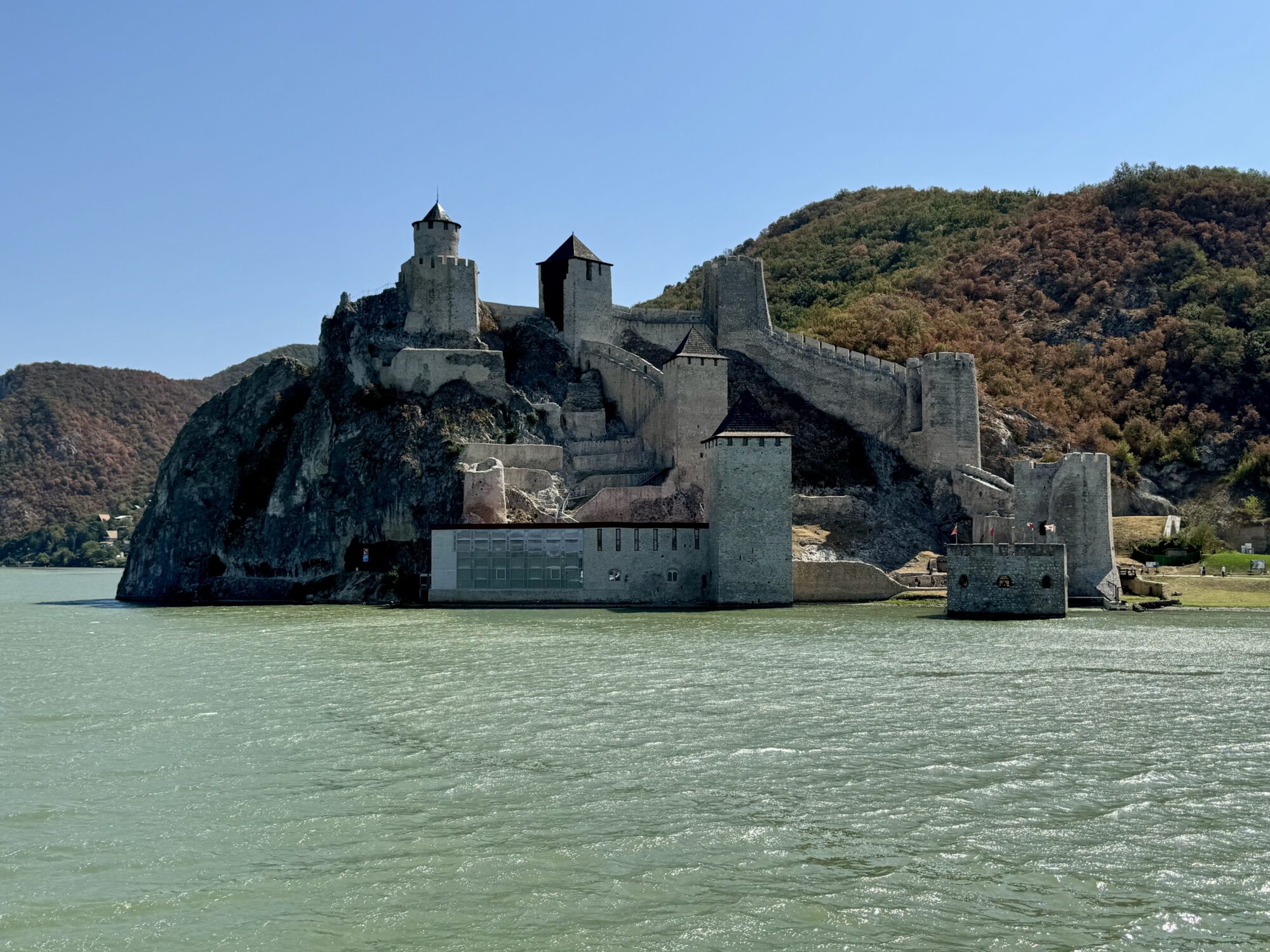
We visited two sites in Northern Serbia that could not be more different in age or appearance—Golubac Fortress, which dates back to the 14th century, and Lepenski Vir, an archaeological site over 8,000 years old. Experiencing both in one day offered a striking contrast between a fortified medieval outpost and an ancient riverside community.
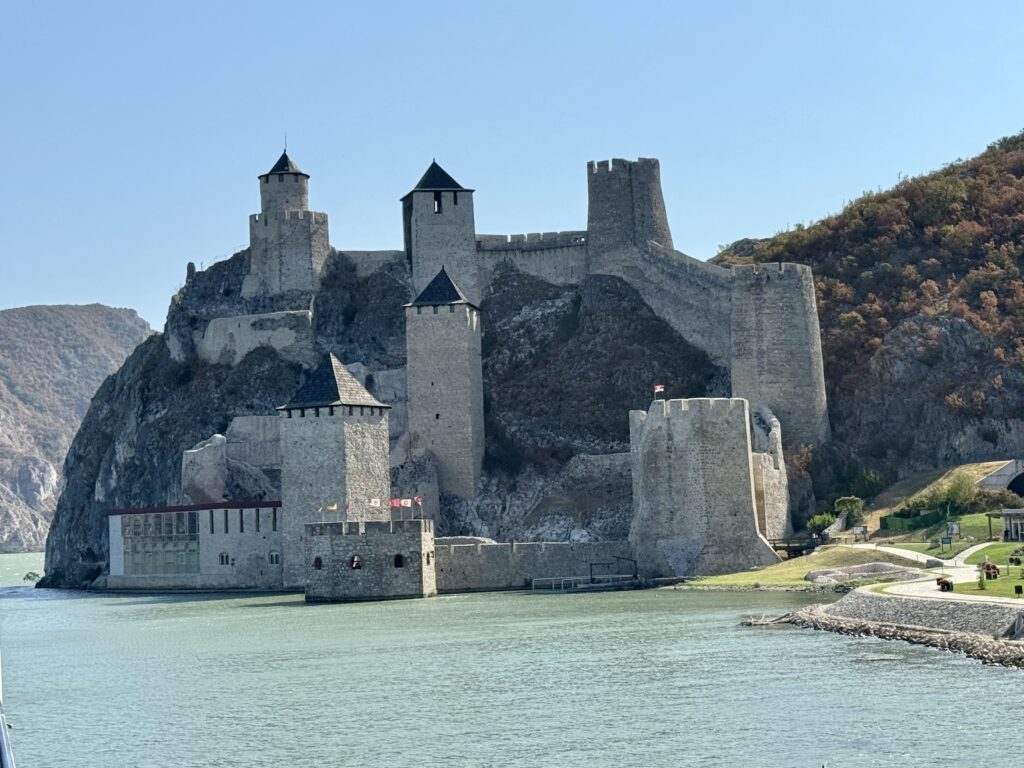
Golubac Fortress: A 14th Century Defensive Stronghold
Golubac Fortress, built in the 14th century, sits on the banks of the Danube River. It served as a defensive point controlling the vital waterways and roads that linked East and West. Its location was strategic, pressed against the steep cliffs of the Ridan mountains for protection on one side, while the Danube acted like a moat on the other. Originally, this area marked the border between Serbia and Hungary, and later it fell under Ottoman control.
The fortress itself is impressive, with eight square towers that served both as watchtowers and defensive points. To enter, you cross a water-filled moat, a classic medieval defense feature that remains in place today. As soon as we stepped inside, we noticed a sign warning about venomous snakes—an unexpected notice that I didn’t really want to see – Yikes!


Inside the fortress grounds, several exhibits gave insight into medieval life and the history of Golubac. There were displays of weapons, tools, and models showing how the fortress might have looked in its prime. One corner featured a knight in a full suit of armor—impressive in size but perhaps less intimidating when standing completely still for photos.
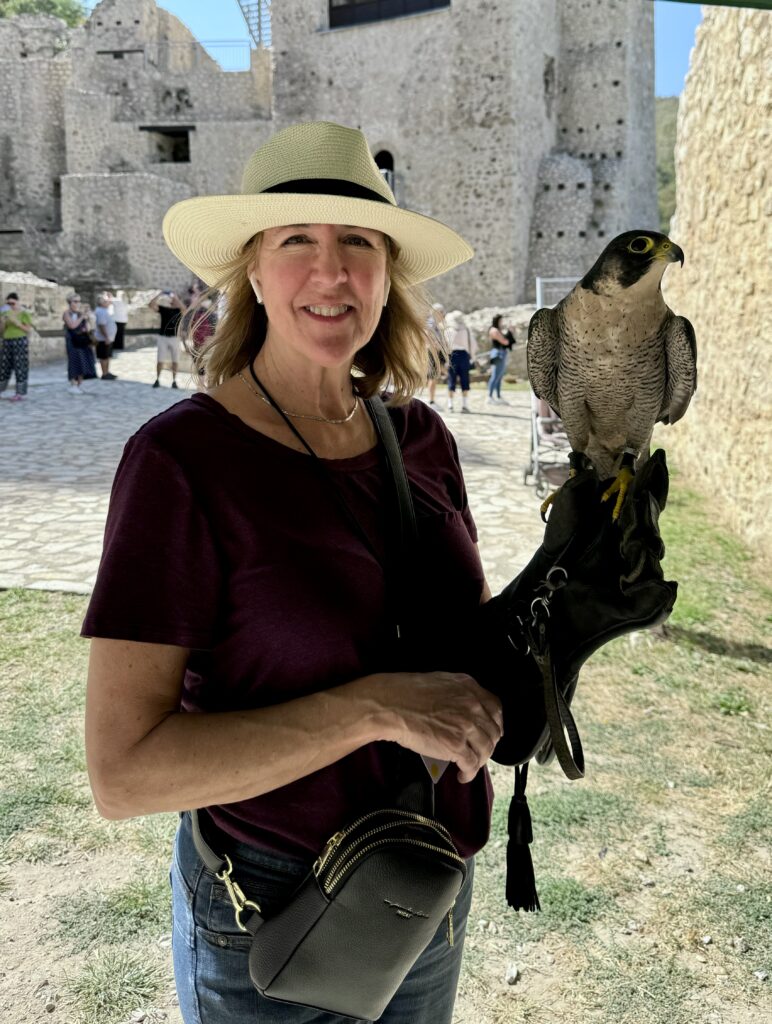
Just outside the main walls, a small demonstration area featured falconry, a tradition with deep roots in the region. I was given a thick leather glove and the chance to hold a trained falcon. It was interesting to feel the bird’s weight and see its sharp gaze up close. The handler explained how the birds are trained, cared for, and how they were once used for hunting.

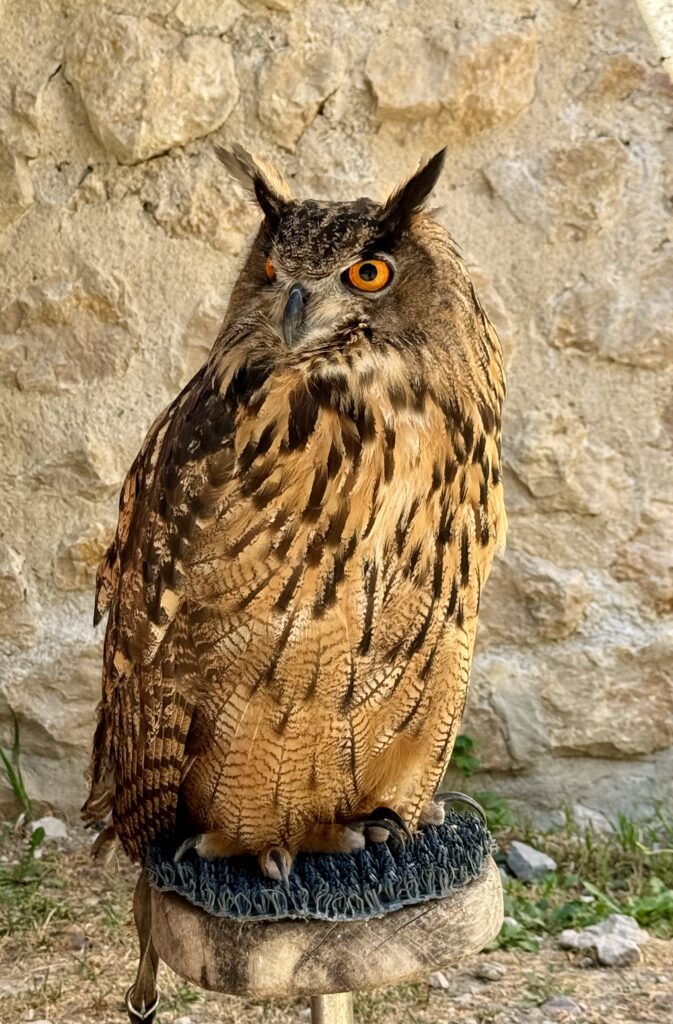
Alongside the falcons was an enormous Eurasian Eagle Owl, a species native to much of Europe and Asia. Its striking orange eyes were impossible to miss—they’re fixed in place, so the owl has to turn its head to look around. This one seemed to survey the area, occasionally swiveling its head nearly 270 degrees. The handler explained that it’s the largest owl species in the world, with a wingspan reaching up to 6.5 feet. Standing that close, it was easy to appreciate both its size and its quiet power, and to imagine how such birds might have helped control pests—or possibly the snake population—around the fortress centuries ago.

Golubac Fortress holds national significance for Serbia and remains one of the country’s most visited tourist attractions. From the river, the view of the fortress is dramatic, but walking through the stone corridors and towers brings its history to life. On the far side of the Danube, we saw where chains were once stretched between the fortress and a structure across the river to prevent unauthorized boats from passing. Today, that opposite bank is Romania, a reminder of shifting borders in this part of Europe.
Journey to Donji Milanovac and Lepenski Vir
After leaving Golubac, we sailed to Donji Milanovac, a small Serbian town of about 2,400 people. From there, we took a short bus ride to Lepenski Vir, an archaeological site that offers a glimpse into life over 8,000 years ago.

Lepenski Vir: One of Europe’s Oldest Settlements
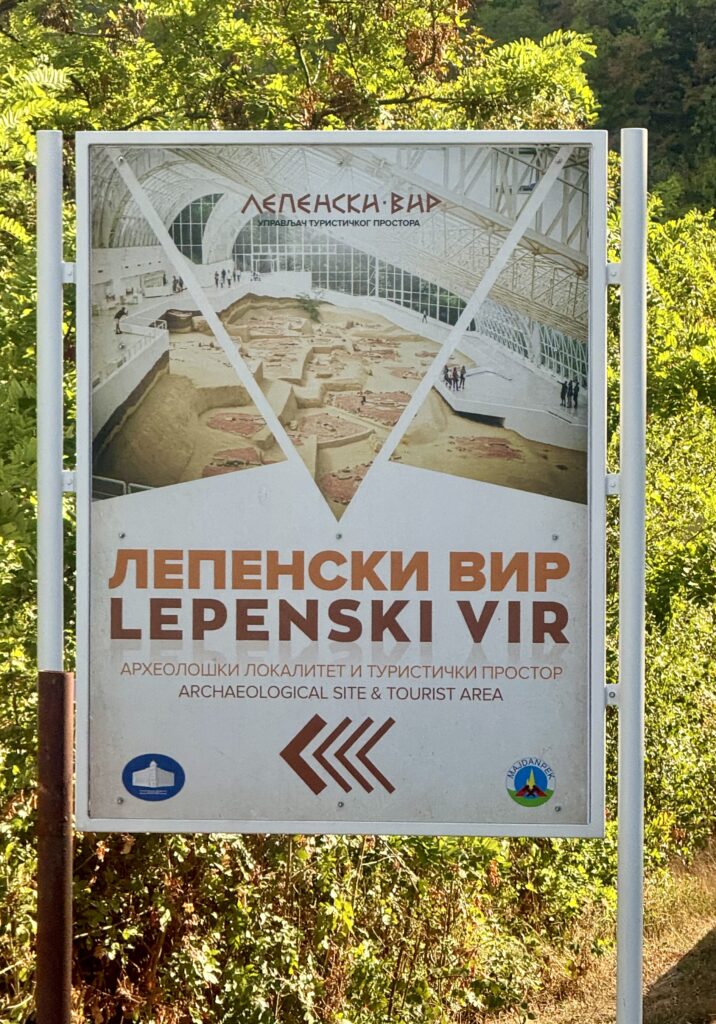
Lepenski Vir is one of Europe’s most important prehistoric sites. Its discovery in the 1960s began when a local farmer found unusual stone fragments on his land, which led to the excavations that revealed the remains of an entire settled community from the Mesolithic period.
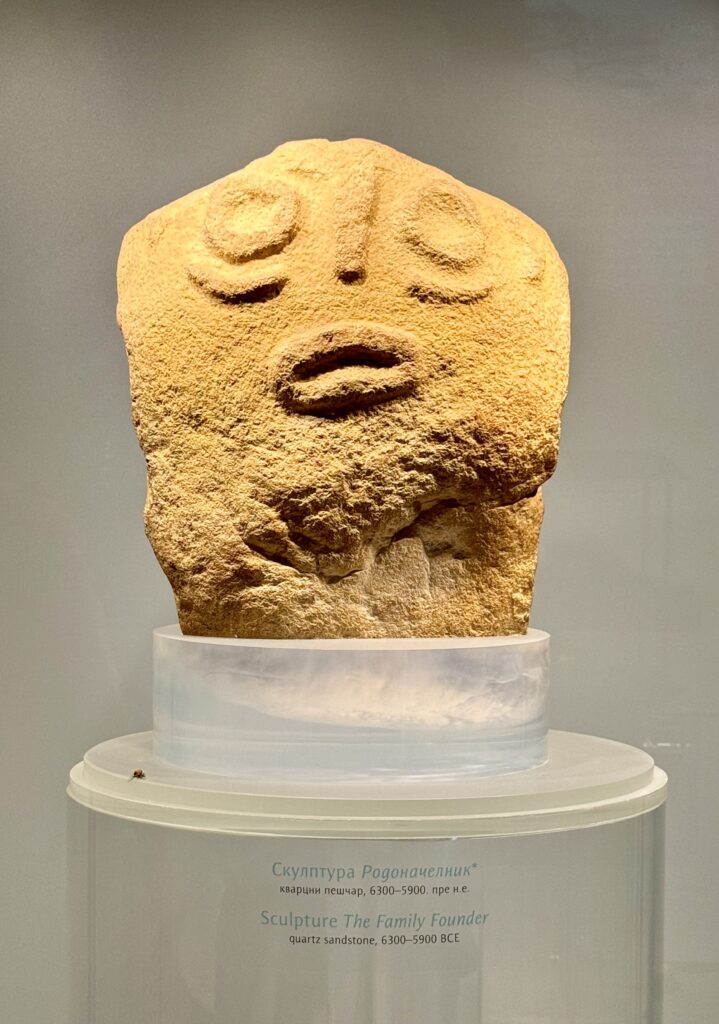
The site contains the foundations of homes, tools, human remains, and mysterious stone sculptures. These sculptures stand out for their odd, almost otherworldly faces that blend human and fish-like features. Their purpose remains a topic of debate among archaeologists, but they likely had spiritual or symbolic meaning for the people who lived here.

Ancient Housing and Community Life at Lepenski Vir
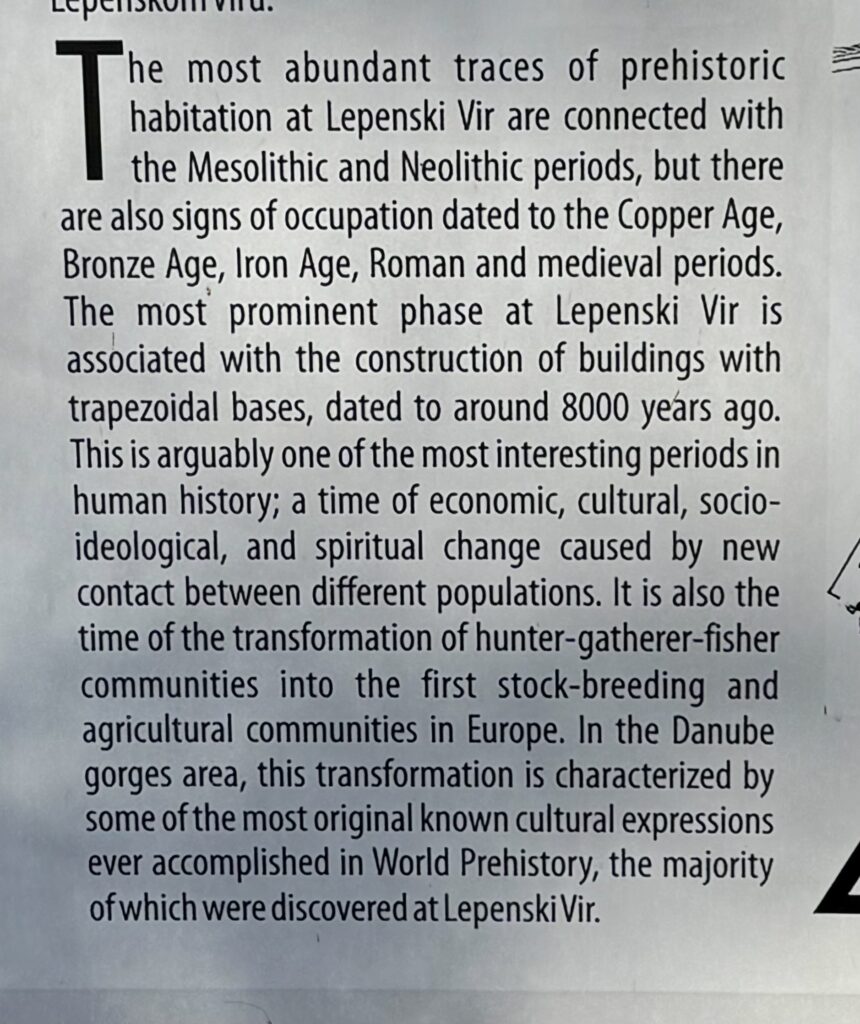
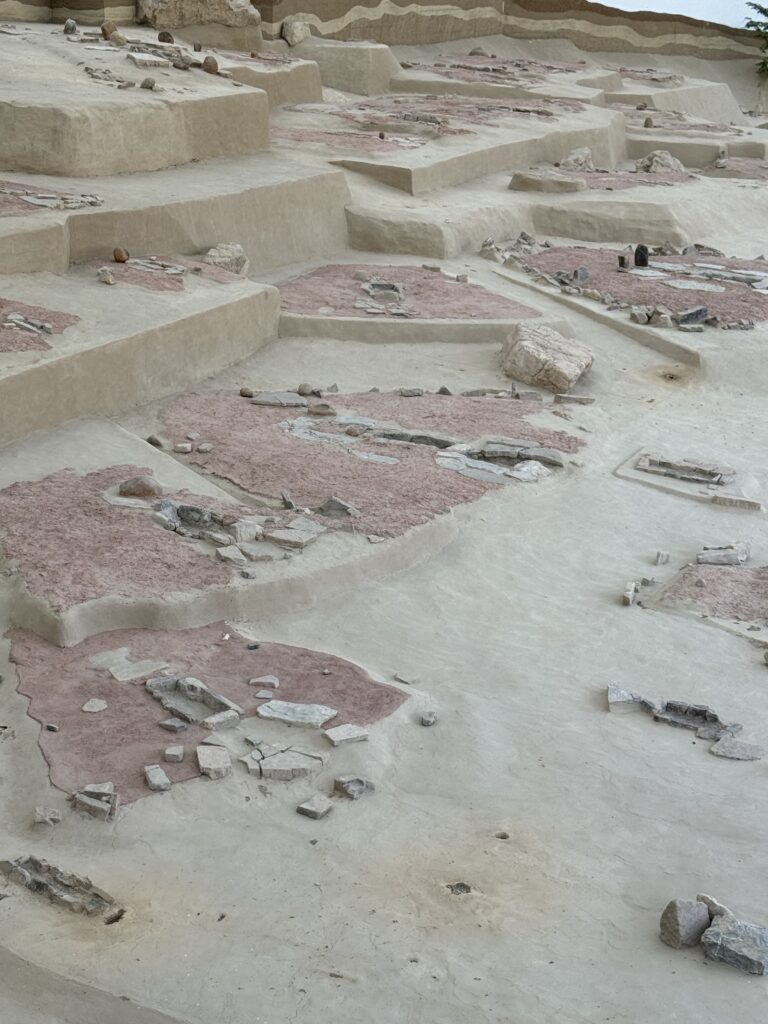
The housing structures unearthed at Lepenski Vir suggest an organized community. The homes had unusual trapezoidal bases and central hearths, showing planning and shared customs. The settlement’s location along the Danube was ideal for fishing and access to fresh water, which helped sustain the population.
Standing among the reconstructed homes, it was incredible to consider how people thousands of years ago lived and interacted with their environment long before modern nations existed. The site provides a powerful connection to the earliest known human settlements in this part of the world.

Sunset Over the Danube: Reflecting on Northern Serbia’s History
After exploring Lepenski Vir, we returned to Donji Milanovac just in time to watch the sunset over the Danube. The river reflected soft hues of gold and orange, and a peaceful end to a day spent walking through the layers of history that define Northern Serbia.
Visiting Golubac Fortress and Lepenski Vir in the same day gave us a unique experience—two snapshots of history separated by time, but linked by the river that has shaped this region for centuries.

See Also: Budapest Revisited: A Wonderful Beginning
Vukovar, Croatia: A Quiet & Powerful Strength
Discovering Novi Sad: Serbia’s Unexpected Charm
Belgrade, Serbia – A City of Complex History
Golubac Fortress and Lepenski Vir – A Day in Northern Serbia (This Post)
The Iron Gate Gorge: From Decebalus to Danube Locks
Viden, Bulgaria: Roses, History and Symphony
Belogradchik Fortress: Bulgaria’s Hidden Gem in the Balkan Mountains