
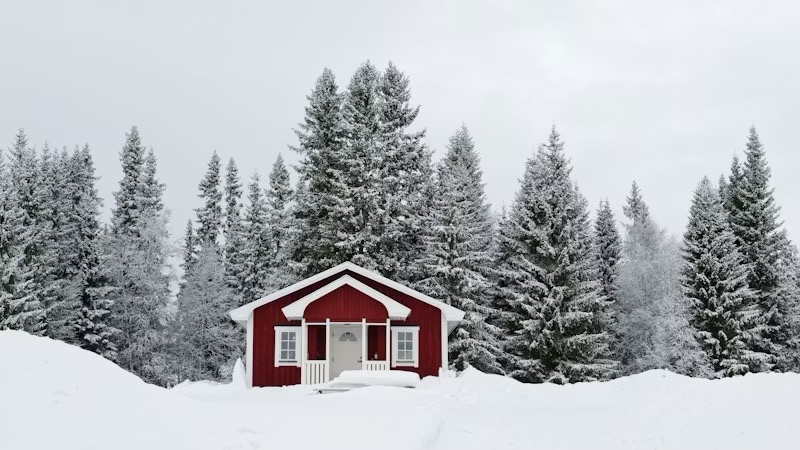
Christmas in Sweden surprises many visitors. Swedish Christmas traditions are lived-in, not staged, giving travelers an authentic experience. Streets are busy but never chaotic, markets serve hot drinks and simple treats, homes glow with candles, and public celebrations like Lucia processions invite participation, not just observation.
The focus is on being together. Meals, music, and small rituals create warmth and connection, and travelers can easily join in — visiting a Christmas market, attending a Lucia procession, or enjoying a julbord. Every tradition is approachable, giving a clear sense of how Swedes celebrate the season.
Forever Customs
At the heart of Swedish Christmas traditions are long-standing customs passed down through generations. The season commemorates the birth of Christ, and Advent begins about four weeks before Christmas, marking a period of reflection, anticipation, and family-centered celebration.
The Gävle Goat
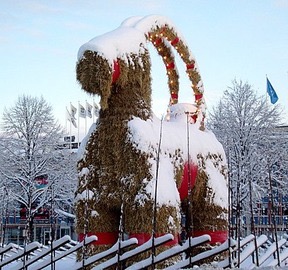
One of the first things that sticks with visitors is the Gävle Goat. Erected each Advent in the town square of Gävle, this enormous straw goat is inspired by an ancient Yule tradition. Since 1966, it has survived repeated attempts at destruction—from arson to car accidents to helicopter stunts—and is rebuilt every year.
The goat is often lit on fire by vandals, stolen, or vandalized, but the city documents every incident carefully. Some locals place bets on how long it will survive each year. Tourists and Swedes alike follow its fate through news outlets and social media accounts (and YouTube) dedicated to the goat. Visiting Gävle during Advent gives travelers a chance to see one of the most unusual and widely recognized symbols of Swedish Christmas traditions in person.

Advent and Family Baking
Families light the first candle in the Advent wreath and add one more each Sunday until Christmas. Homes are decorated with star-shaped ornaments that let candlelight shine through, creating a warm, inviting glow. Seasonal treats are everywhere: Pepparkakor (gingerbread cookies), Lussekatter (saffron buns), and Köttbullar (Swedish meatballs). Swedes also enjoy Glögg, a spiced mulled wine that’s perfect for chilly winter evenings.
Baking together is central to the season. Gingerbread houses (Pepparkakshus) are decorated with icing and candy, and everyone — young and old — joins in. These activities are less about perfection and more about being together, which is at the heart of Swedish Christmas traditions.
Saint Lucia Day
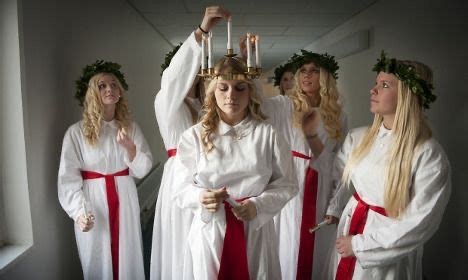
December 13 is Saint Lucia Day, celebrating the winter solstice and honoring a third-century martyr who brought food to Christians in hiding. Processions feature girls in white gowns wearing candle crowns, singing traditional songs, accompanied by boys in star hats. Schools, churches, and community centers host events that are easy for visitors to see and experience. Saint Lucia Day is one of the most visible examples of Swedish Christmas traditions, offering both local flavor and a welcoming way for travelers to join in.
Decorating: Trees and Homes
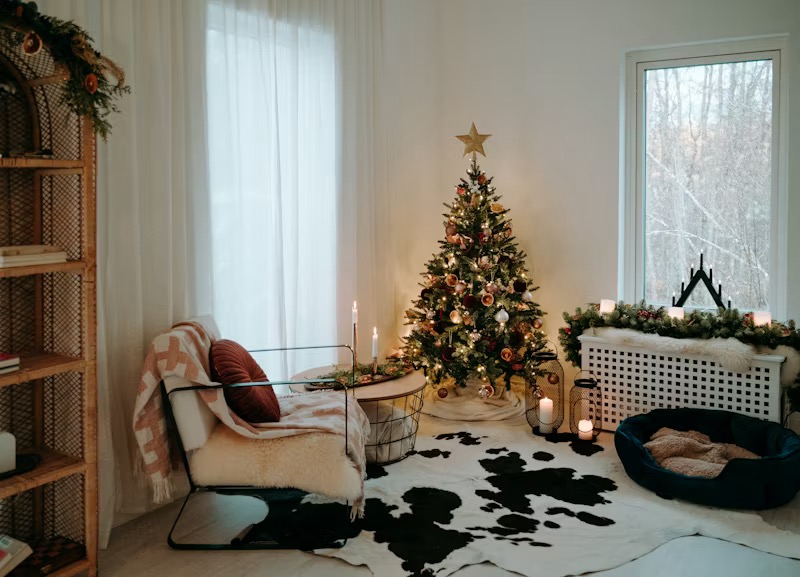
Choosing a Christmas tree is a serious family affair. Rural households sometimes cut their own, while city dwellers pick them up in town squares. Decorations vary — electric lights for safety, candles for tradition, Swedish flags, garlands, and ornaments — but all reflect warmth, care, and family connection. The tree is another central element of Swedish Christmas traditions, tying together community and home life.
Racing to Church
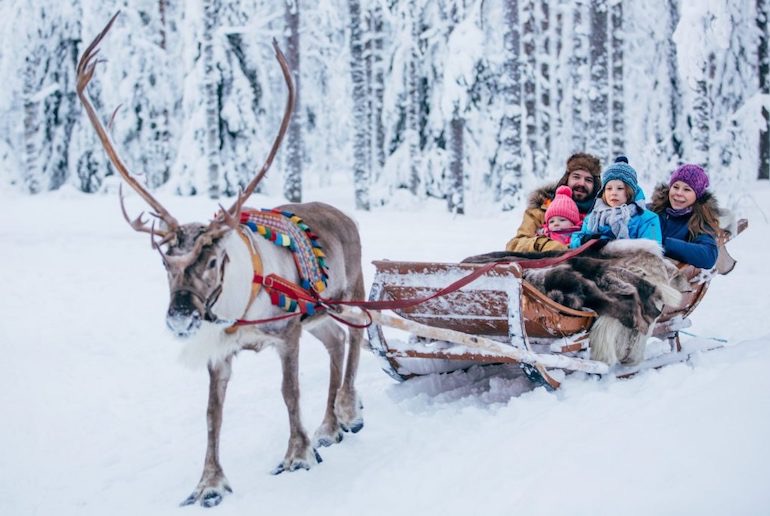
Attending church remains popular, with families historically traveling by horse-drawn sleighs. Some villages continue the playful “race to church,” where neighbors compete to arrive first, believing it brings good luck and a prosperous harvest. Modern families often drive or walk, but the tradition highlights the festive, communal nature of Christmas in Sweden. Services are family-friendly and include carols, readings, and music, making it a practical and cultural experience for travelers.
The Julbord
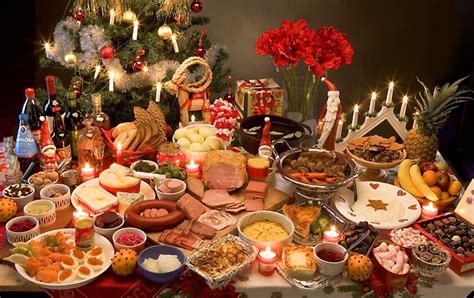
Christmas Eve revolves around the julbord, a buffet of traditional dishes: Julskinka (Christmas ham), rice porridge with a hidden almond, pickled herring, beet salad, lutfisk (cured fish), meatballs, cabbage pudding, Jansson’s Temptation, Christmas potato sausage, stollen, saffron buns, ris à la Malta, dark beer (Julöl), soft drink (Julmust), and gingerbread cookies. Meals are leisurely, focused on food, family, and conversation.

Donald Duck Christmas Special
At 3 p.m. on Christmas Eve, nearly every Swedish household pauses to watch the Donald Duck Christmas special(Kalle Anka och hans vänner önskar God Jul). This hour-long program, featuring Donald Duck, Mickey Mouse, and other Disney characters in classic holiday cartoons, has aired every year since 1959. Families of all ages gather together, enjoying snacks and sharing the moment across generations. Even visitors notice this uniquely Swedish tradition — turning on the TV at exactly 3 p.m. is practically a national ritual, adding a playful and familiar touch to the holiday celebrations.
Saint Nick Drops In
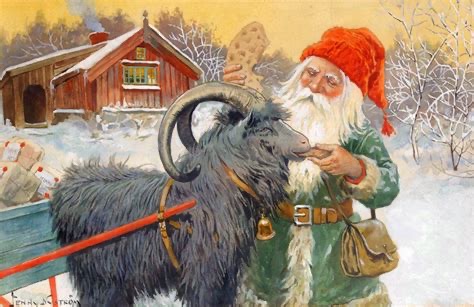
Jultomten, often called tomten, is the figure who delivers gifts on Julafton (the evening of December 24), giving out julklappar, which likely evolved from the old Yule log tradition. Unlike Santa climbing down chimneys, Jultomten delivers presents in person, usually portrayed by an older family member who secretly dresses up and knocks on the door with a sack of gifts. The modern Jultomte is a blend of the pre-Christian tomte—a small, gnome-like farm spirit believed to protect the household and reward good care of the land—and the Dutch-influenced Santa Claus. Historically, the tomte was viewed as an ancestral spirit tied to the homestead and even thought to follow families when they moved, but today Jultomten is commonly depicted in the familiar Santa style while keeping his uniquely Swedish roots.
Knut’s Day: Out with the Old
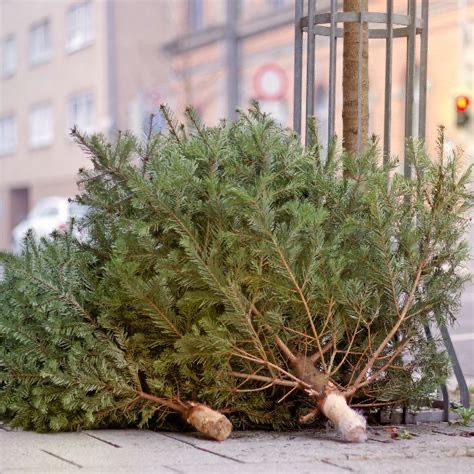
Swedish Christmas officially concludes with Knut’s Day on January 14. On this day, children help take down trees and collect edible decorations. In many households, the tree is dragged outside to be burned or composted, and any leftover treats are shared. Some communities organize games or small parties to mark the end of the season. For travelers, it’s an opportunity to see how Swedes wrap up the holidays, highlighting a practical and communal side of Swedish Christmas traditions.
Practical Tips for Travelers
- Lucia processions are widely held and free to attend; check local schedules for times.
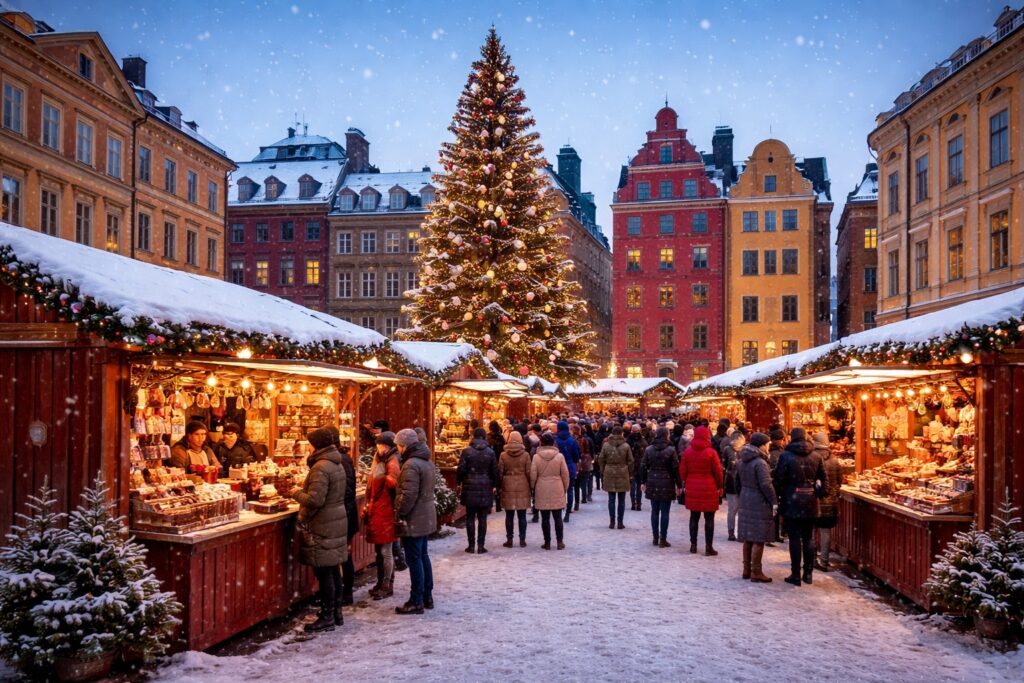
- Many Christmas markets operate through late December, offering food, crafts, and gifts.
- Julbord meals are often booked in advance at restaurants, especially in larger cities.
- Weather can be cold and snowy — dress in layers, and wear shoes suitable for icy streets.
Joy, Family, and Memories
Swedish Christmas traditions show how holidays can blend history, culture, and everyday life. Candlelit homes, festive foods, Saint Lucia processions, gingerbread baking, the Gävle Goat, and the Donald Duck Christmas special create moments that families and communities look forward to year after year. Experiencing these traditions offers travelers a genuine glimpse of Swedish life and the joy that defines the season.
God Jul!
Join us as we celebrate ’12 Days of Christmas Around the World‘
German Christmas Traditions:Timeless Customs, Stollen & Holiday Magic
Christmas in Finland: A Winter Wonderland
Christmas in Venezuela: Music, Holiday Food & Local Traditions
Christmas in Ukraine: Traditions, Customs and Resilient Celebrations
Japan at Christmas: Illuminations, KFC and Strawberry Shortcake
Christmas in Greece: Celebrating in the Heart of the Mediterranean
Christmas in Spain: Quirky Customs, Delicious Feasts and Family Fun
Wonderful Christmas in Iceland: 13 Yule Lads and Northern Lights
Christmas in Barbados:Unwrapping Joy in the Caribbean Sun
Christmas in Australia: Sun, Surf and Holiday Cheer