
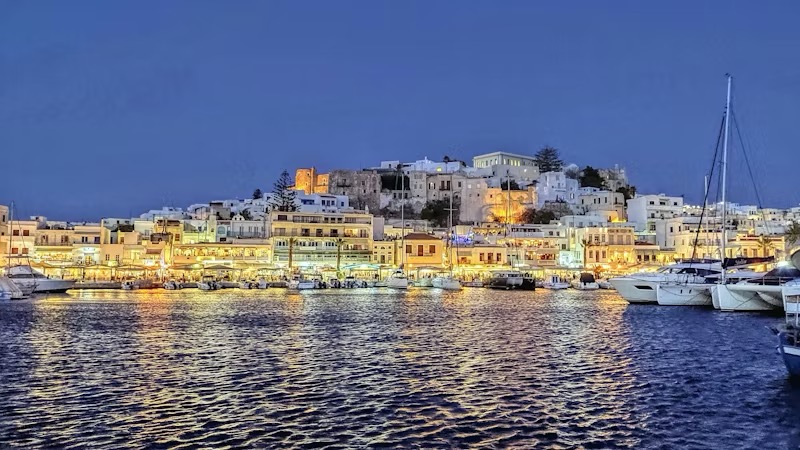
Christmas in Greece is a rich blend of centuries-old traditions, Orthodox faith, and seasonal cheer. Villages and cities glow with lights, bakeries fill the air with sweet aromas, and communities honor customs that trace back generations. Decorated boats sail in harbors, festive foods fill tables, and carolers bring music to streets, making the holiday season in Greece uniquely captivating.
A Holiday Rooted in History
Across Greece, Christmas isn’t a single event but a series of meaningful practices. It shows up in the way families prepare their homes, the foods they bake, and the rituals communities uphold. The season balances religious devotion with festive cheer, blending old rituals with modern celebrations. People hang lights, sing songs, and celebrate in ways that feel natural to their towns and villages.

Decorating: Trees and Boats
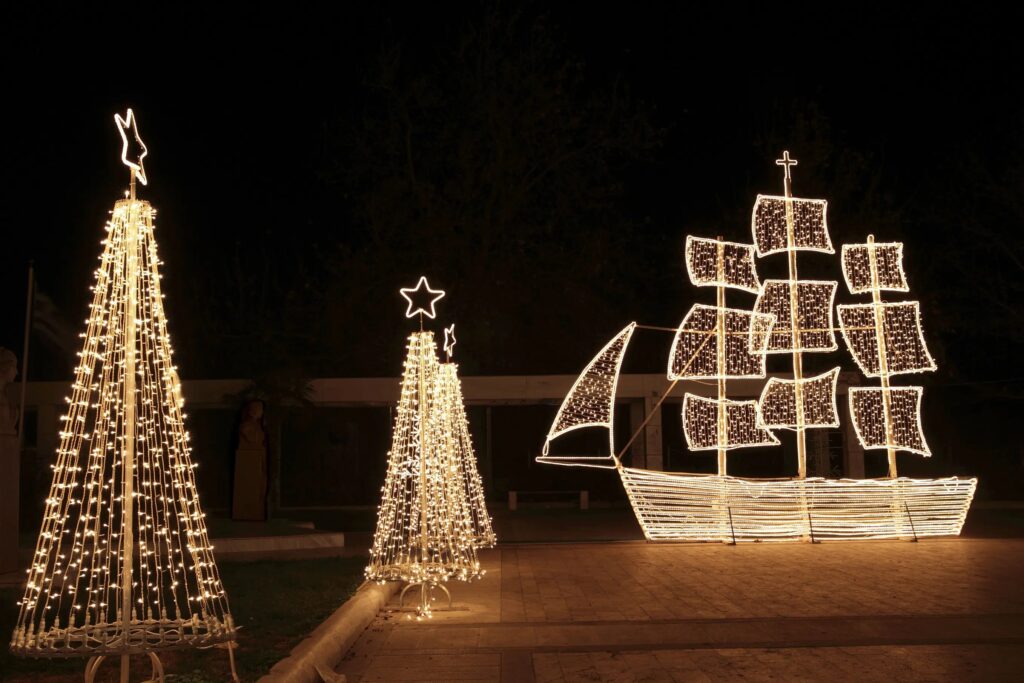
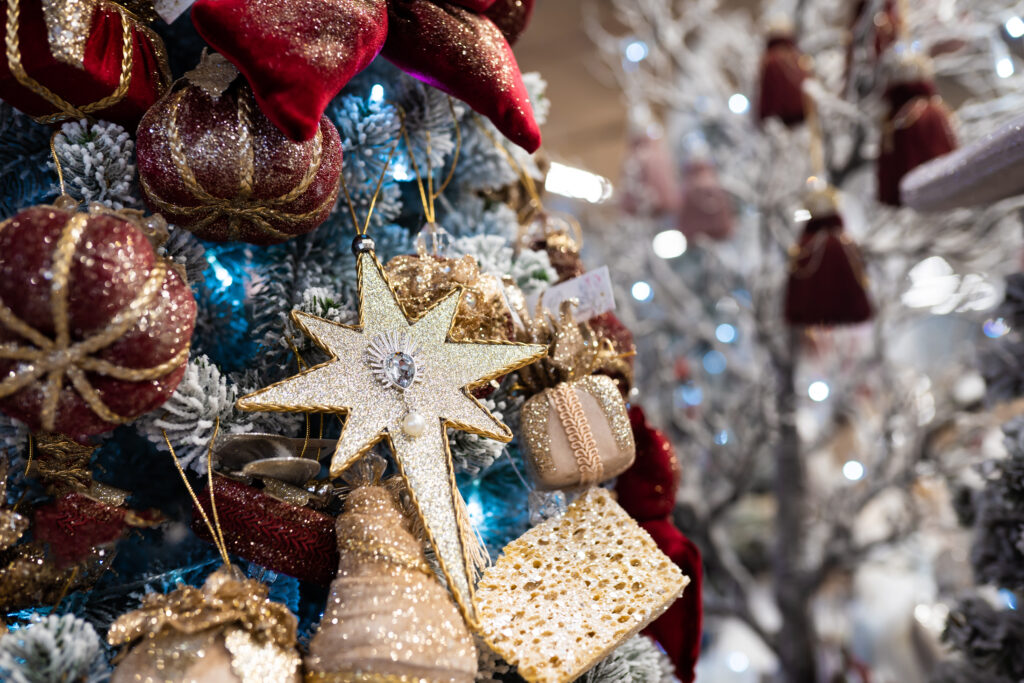
While Christmas trees have grown in popularity since King Otto introduced the first one in 1833, Greece also celebrates a unique maritime tradition: the Karavaki, or Christmas Boat. Families decorate small boats in their homes or display larger vessels in harbors, honoring the safe return of sailors and preserving a centuries-old link to the sea. Today, trees and boats often appear side by side, creating a distinctive and vibrant holiday atmosphere that reflects both land and sea.
Markets That Sparkle
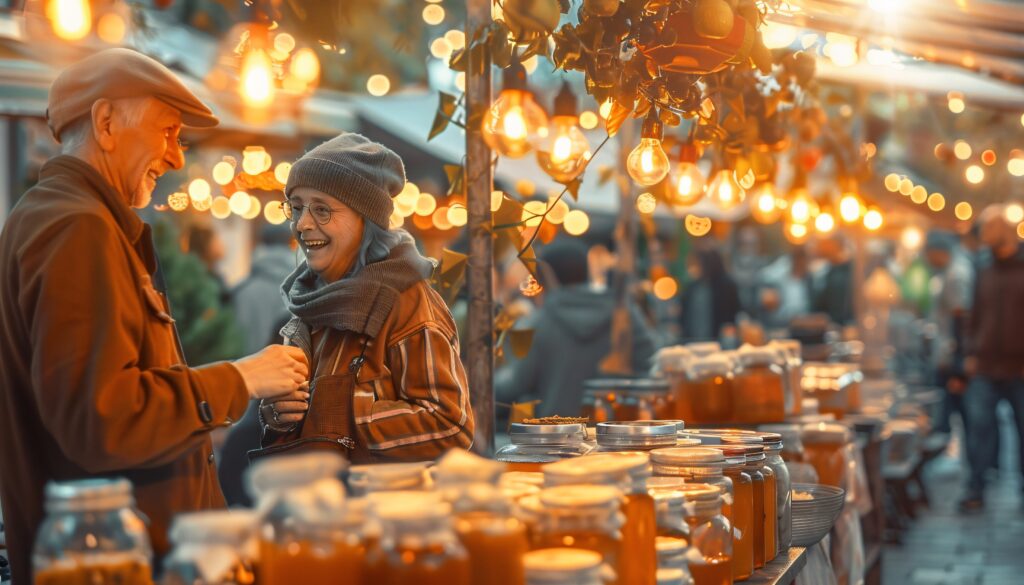
Christmas markets in Greece bring together old traditions and modern touches. Towns and cities fill with stalls offering handcrafted gifts, ornaments, sweets, and local treats. Music and lights create a festive buzz, and the smells of seasonal foods draw people in. Spending time at a market is just as much about soaking up the holiday atmosphere as it is about shopping.
Kalanda: Greek Caroling & Good Cheer
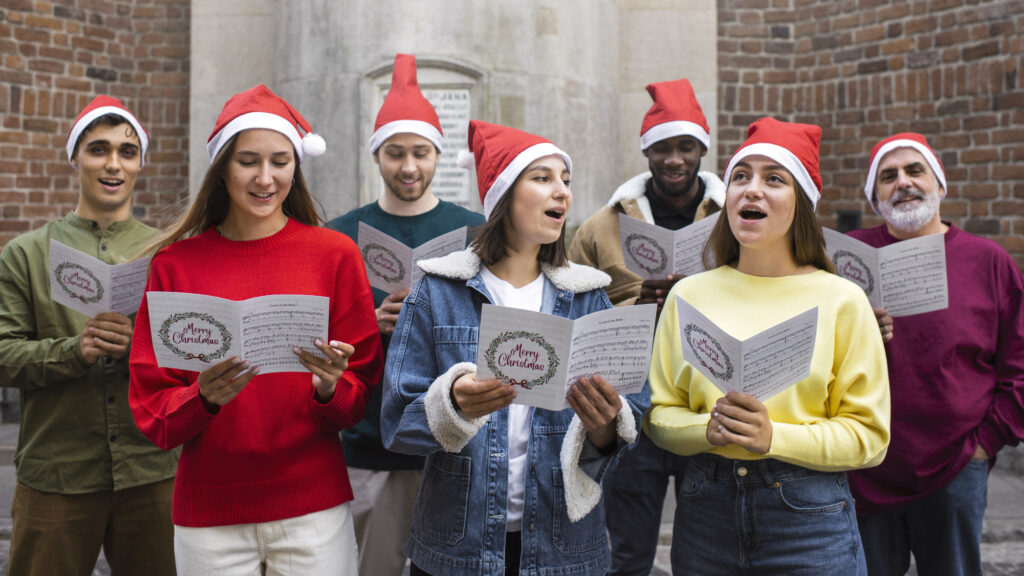
The tradition of Kalanda starts on Christmas Eve, when children and adults go door-to-door singing carols and wishing everyone health, happiness, and prosperity. In some places, they carry small decorated boats, keeping older island customs alive. Residents return the gesture with treats like nuts, dried figs, and pastries. What makes it special is seeing families and neighbors share a small celebration that really brings the community together.
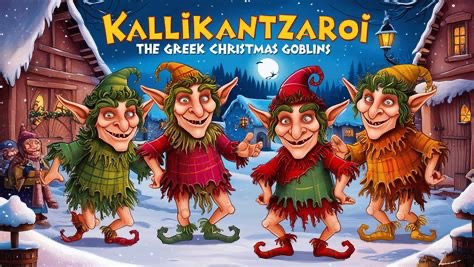
The Kallikantzaroi
Greek folklore introduces mischievous characters known as Kallikantzaroi which are goblins that appear during the Twelve Days of Christmas (December 25–January 6). These colourful guys attempt to disrupt households and crops but are largely harmless. Families rely on age-old practices to keep them away: leaving food on rooftops, keeping the Yule Log burning, and sprinkling ashes on crops. These playful spirits add a whimsical, slightly chaotic touch to the season, keeping traditions alive while reminding families of old legends.
Basil and Colander Protection
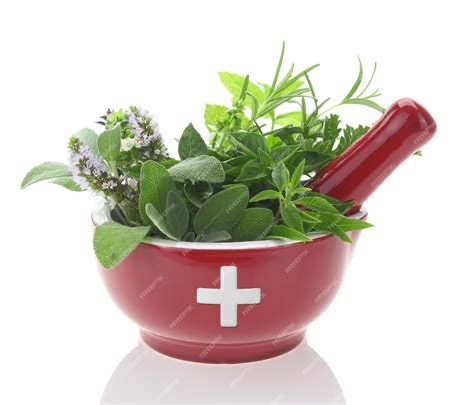
To guard against Kallikantzaroi, households often place a bowl of water with basil and a small cross at the front entrance. Daily sprinkling of this “holy water” throughout the home is thought to maintain protection. A colander on the doorstep also confuses the goblins, who are said to be unable to count its holes. By Epiphany (January 6), the holy water and priestly blessings restore order, and the spirits retreat underground for the year. These practices connect folklore with daily life, showing how traditions are woven into practical actions during the holidays.
Christopsomo: Christ’s Bread
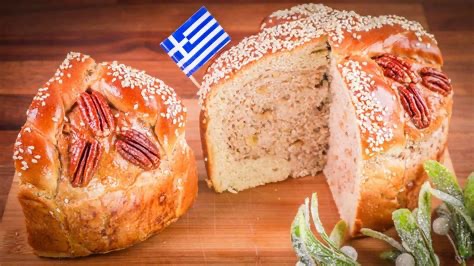
In Greece, Christmas traditions are closely tied to the Orthodox faith. Advent fasting leads up to Christmas Eve, when families attend Midnight Mass and prepare the main meal for Christmas Day. A central part of the celebration is Christopsomo, or Christ’s Bread, often decorated with meaningful symbols. Baking and sharing this bread is a deeply symbolic act, honoring tradition, faith, and family heritage. It represents unity and gratitude, connecting families across generations through a shared ritual.
Feasts Fit for the Season Celebrating Christmas in Greece
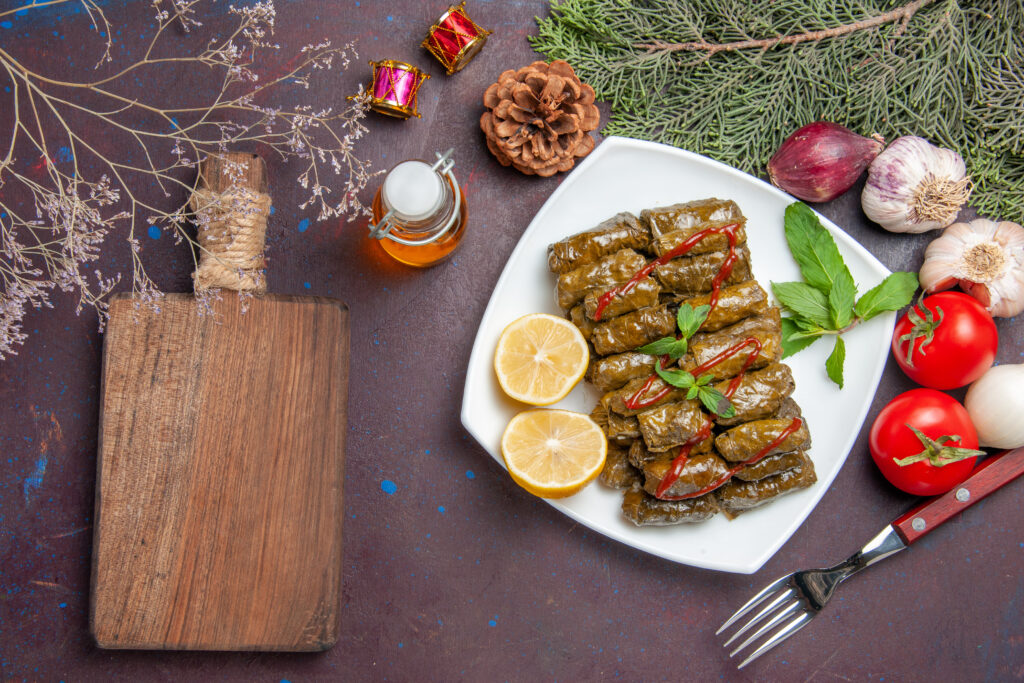
Main dishes vary regionally, often featuring roasted lamb or pork. Side dishes include spinach and cheese pies, salads, and seasonal vegetables. Yiaprakia, or stuffed grape leaves, are popular in many households, reflecting regional flavors and family traditions. Every dish tells a story of culture and heritage, connecting past and present through taste and shared mealtime experiences. Greek holiday meals are as much about community and conversation as they are about food.
Sweets That Tell a Story
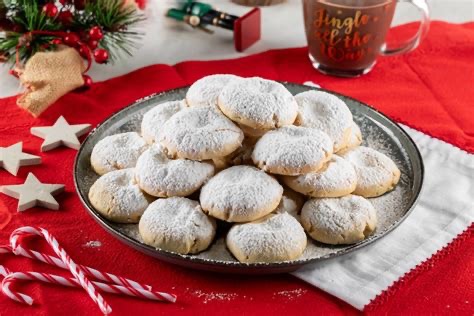
Greek Christmas desserts are celebrated and diverse: Melomakarona, honey-soaked spiced cookies; Kourabiedes, almond cookies dusted in powdered sugar; Vasilopita, the New Year’s cake with a hidden coin for luck; and Baklava, layers of phyllo, nuts, and syrup. Each treat carries cultural significance. Vasilopita ties the holiday to the New Year, while Baklava reflects centuries of Mediterranean culinary influence. These desserts offer flavor and storytelling, linking meals to broader traditions and leaving lasting impressions on families and visitors alike.
Gift-Giving on St. Basil’s Day
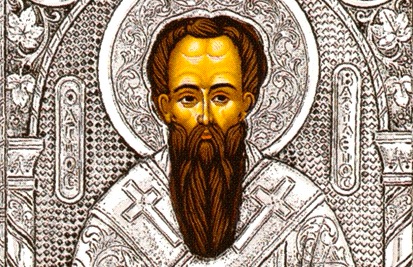
Unlike many countries, gift-giving during Christmas in Greece takes place on New Year’s Day in honor of St. Basil (Agios Vasilis). Families exchange presents and spend the day playing card games or small raffles, turning the holiday into a relaxed, social celebration. Gifts are seen as gestures of goodwill for the year ahead, not the center of the season. It’s a tradition that brings everyone together in a light-hearted, hopeful way, setting a warm tone for the year to come.
Pothariko: Bringing Luck into the Home
A New Year’s custom called Pothariko is an old tradition that continues today. Early on New Year’s Day, the first person to enter a home is usually someone important to the family, often a child or the firstborn. They always step inside with their right foot and may carry a pomegranate, which they break at the door. The family watches during the brief ritual, which typically takes only a minute or two, and the seeds are seen as a sign of good luck and prosperity for the household.

Experiencing Greece in December
Beyond food and folklore, Greece in December shows a mix of winter landscapes and lively local life. In the north, mountains and villages may have snow, while the islands stay cooler but rarely cold, with clear skies and brisk sea air. Each region has its own rhythms, with markets, craft fairs, and small festivals bringing neighbors together and giving travelers a real sense of local life.
Moments That Matter
December in Greece offers experiences you won’t find anywhere else. Visitors can explore villages and islands alive with seasonal traditions, wander streets glowing with lights, and join in local celebrations in ways that are both authentic and lively. It’s a time when the country’s history, culture, and festive spirit intersect, giving travelers a chance to see Greece through the lens of its holidays.
Καλά Χριστούγεννα! (Kala Christougena!) – Merry Christmas!
Join us as we celebrate ’12 Days of Christmas Around the World‘
German Christmas Traditions:Timeless Customs, Stollen & Holiday Magic
Christmas in Finland: A Winter Wonderland
Christmas in Venezuela: Music, Holiday Food & Local Traditions
Christmas in Ukraine: Traditions, Customs and Resilient Celebrations
Japan at Christmas: Illuminations, KFC and Strawberry Shortcake
Christmas in Greece: Celebrating in the Heart of the Mediterranean
Christmas in Spain: Quirky Customs, Delicious Feasts and Family Fun
Wonderful Christmas in Iceland: 13 Yule Lads and Northern Lights
Christmas in Barbados:Unwrapping Joy in the Caribbean Sun
Christmas in Australia: Sun, Surf and Holiday Cheer