
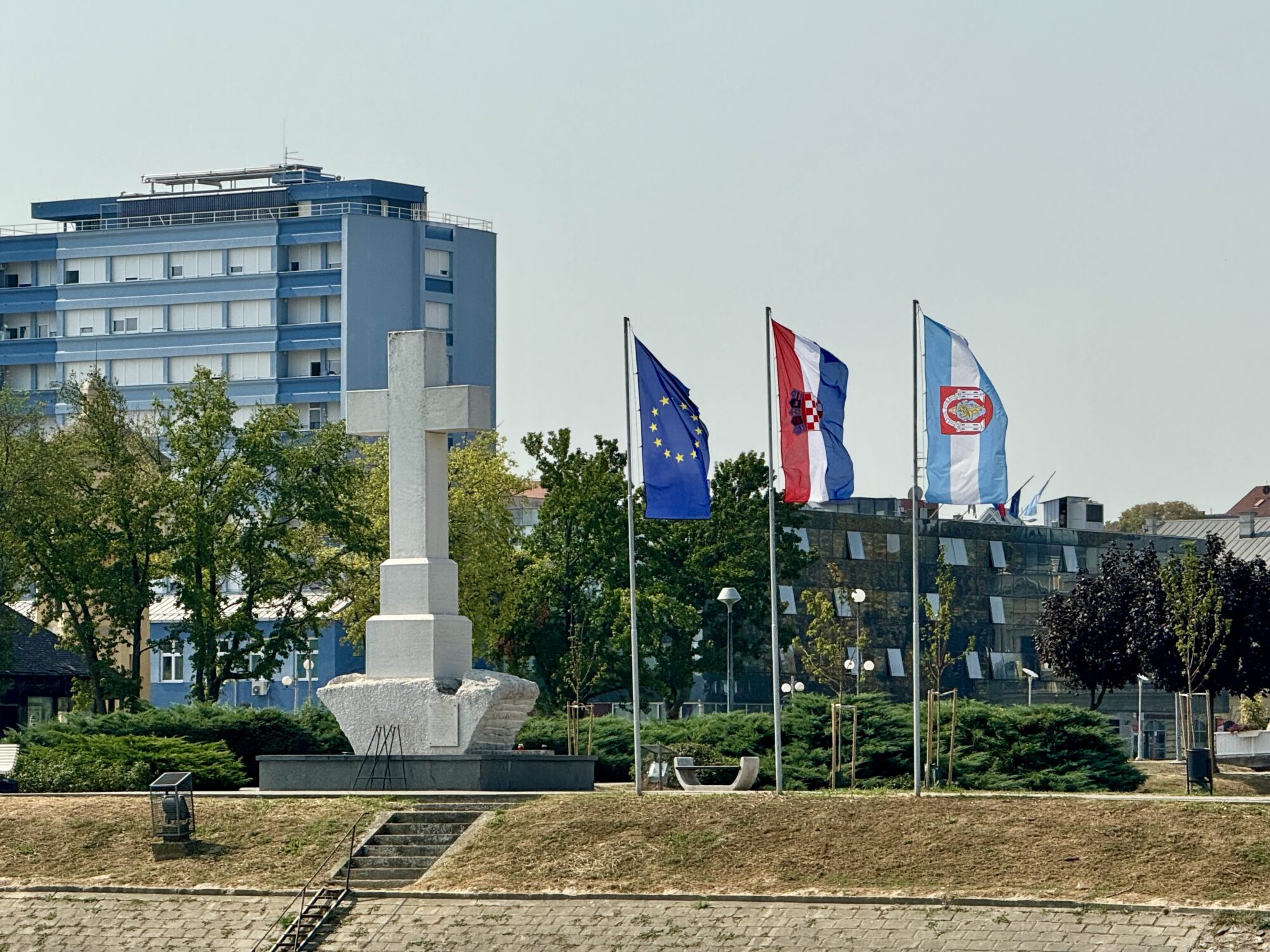
We imagined that Vukovar, Croatia might be an emotional visit because of its history. It’s one of those places where the past still lingers—etched into walls, burned into memories, and stitched into the fabric of everyday life. Before our visit, we didn’t fully understand. There are cities you breeze through, soaking in the scenery and taking home souvenirs. And then there are cities like Vukovar that make you pause, lean in, and try to understand the weight of what they have endured.
Vukovar is a small city on the banks of the Danube in eastern Croatia, and while it doesn’t top many tourist itineraries, it left a deep impression on us. We walked its streets and listened to its stories—some whispered, some still raw—and came away deeply moved. Our guide was exceptional, offering us a powerful glimpse into both the city’s painful past and its quiet resilience.
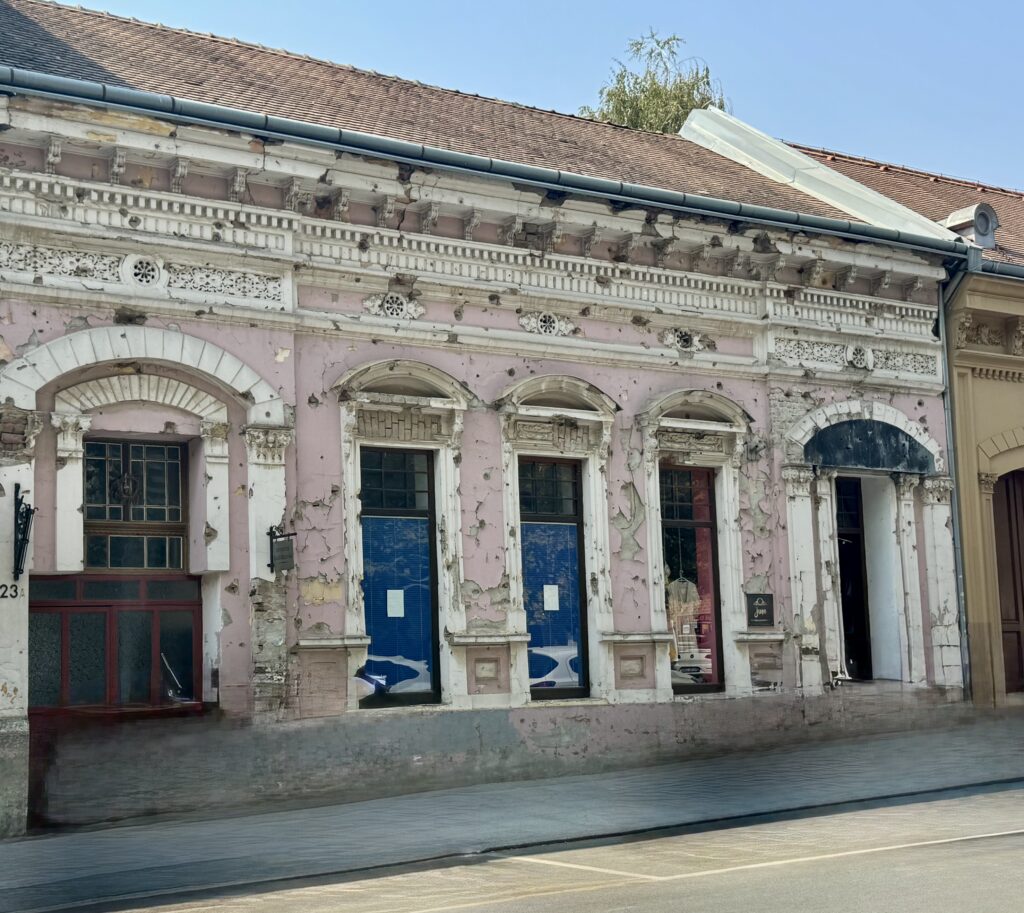


A City Scarred and Standing
At first glance, Vukovar looks like any other quiet riverside town. But it doesn’t take long to spot the reminders. Bullet holes in facades. Shrapnel scars on stone. Preserved landmine signs, still standing in fields to mark where not to step.
The Battle of Vukovar, one of the most brutal in Croatia’s fight for independence, took place here over 87 days in 1991. The Yugoslav People’s Army and Serbian paramilitary forces launched a siege from August to November, and the destruction was devastating. Many residents lost their lives. Thousands were displaced. Entire neighborhoods were leveled.
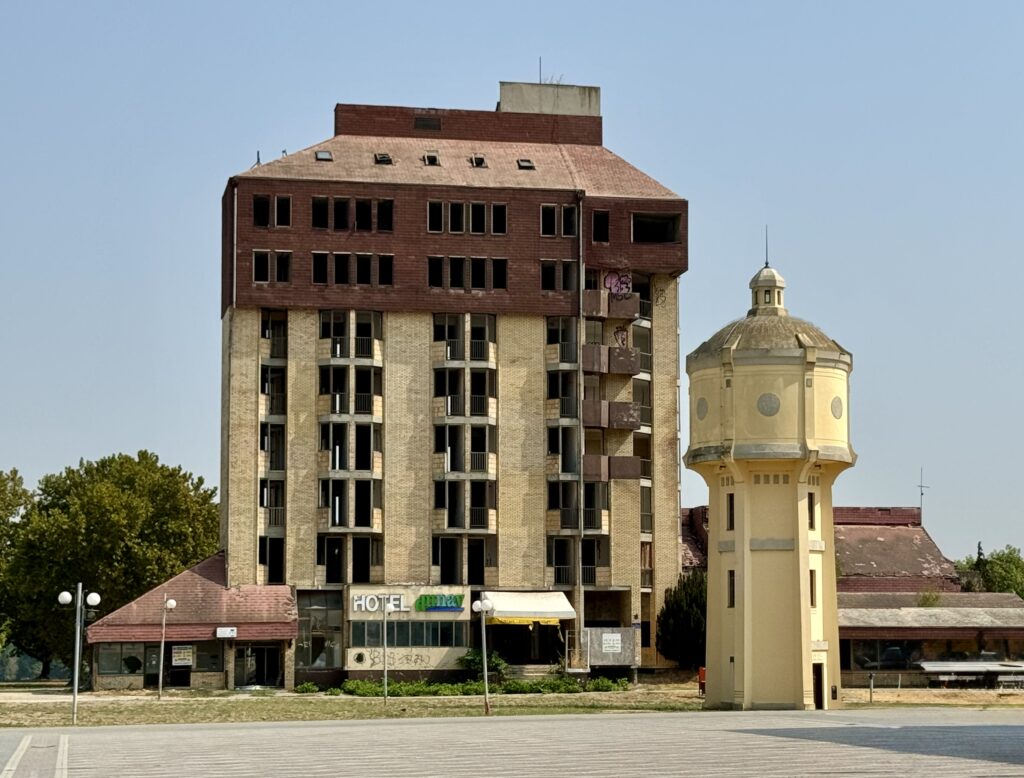
One of the most visible symbols of that time is the Vukovar Water Tower. Once an ordinary part of the skyline, it was shelled over 600 times during the siege. Today, it still stands—repaired but not fully restored—as a proud, damaged symbol of resistance. Seeing it up close is humbling.
We also visited a moving memorial park dedicated to those who died in the conflict. It’s peaceful, filled with tall trees and rows of graves, but heavy with emotion. The Eternal Flame burns there—a small gesture of remembrance in a city that has endured more than most.


Symbols of Love and Peace
Despite the pain of its recent history, Vukovar also radiates something else: love. Here, the dove and the heart have become symbols of peace and healing. Giving a heart to someone—a friend, a partner, a child—is a local way of saying “I care.” It’s not uncommon to propose marriage with a heart-shaped cookie. There’s a sweetness to that gesture, an everyday softness that feels hopeful.
Vukovar has embraced both its sorrow and its strength. It’s often called a symbol of persistence, courage, and the spirit of a newly independent Croatia. That history is impossible to ignore, but so is the warmth of the people rebuilding their lives here.
A Meal to Remember
One of the most special parts of our visit came over lunch. We were welcomed into a local woman’s home—someone who had lived through the war, rebuilt her life, and now shares her story over food. We spoke through a translator, but the warmth in her eyes and the pride in her cooking needed no translation.
She had worked hard to prepare a traditional Croatian meal. The vegetables came mostly from her garden—fresh, simple, and full of flavor. The main course was a savory meat patty, seasoned just right. Alongside it came a shot of rakija, the homemade fruit brandy that’s as common here as wine is in France. It was strong—think lighter fluid with a touch more character—but part of the experience.
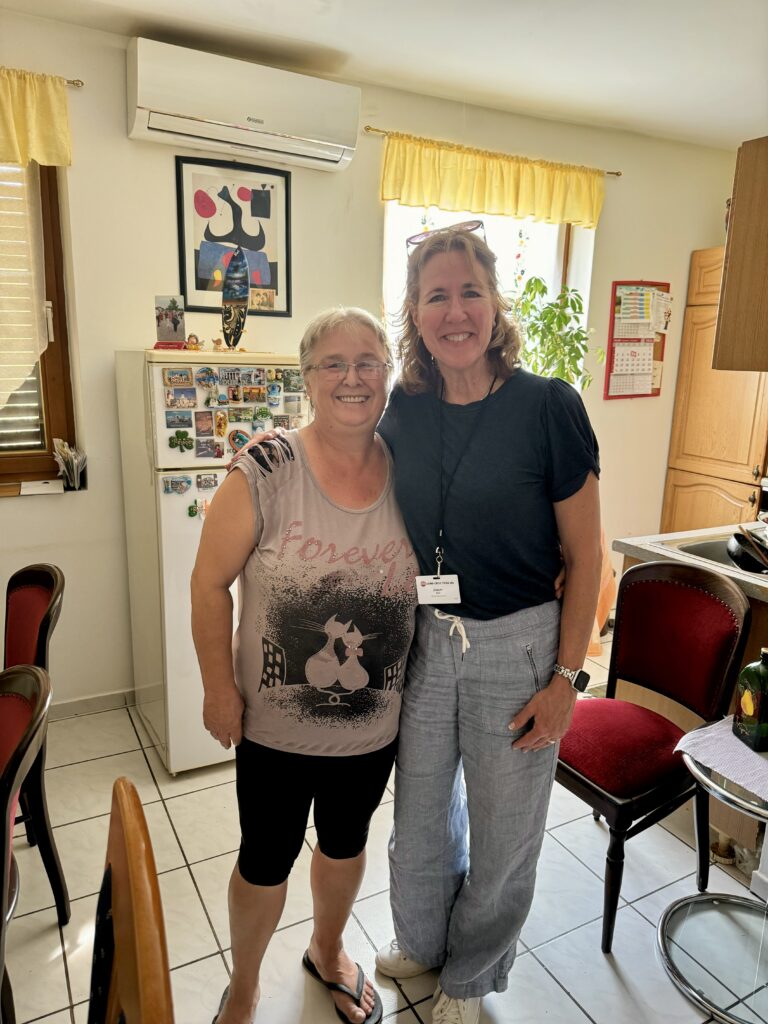

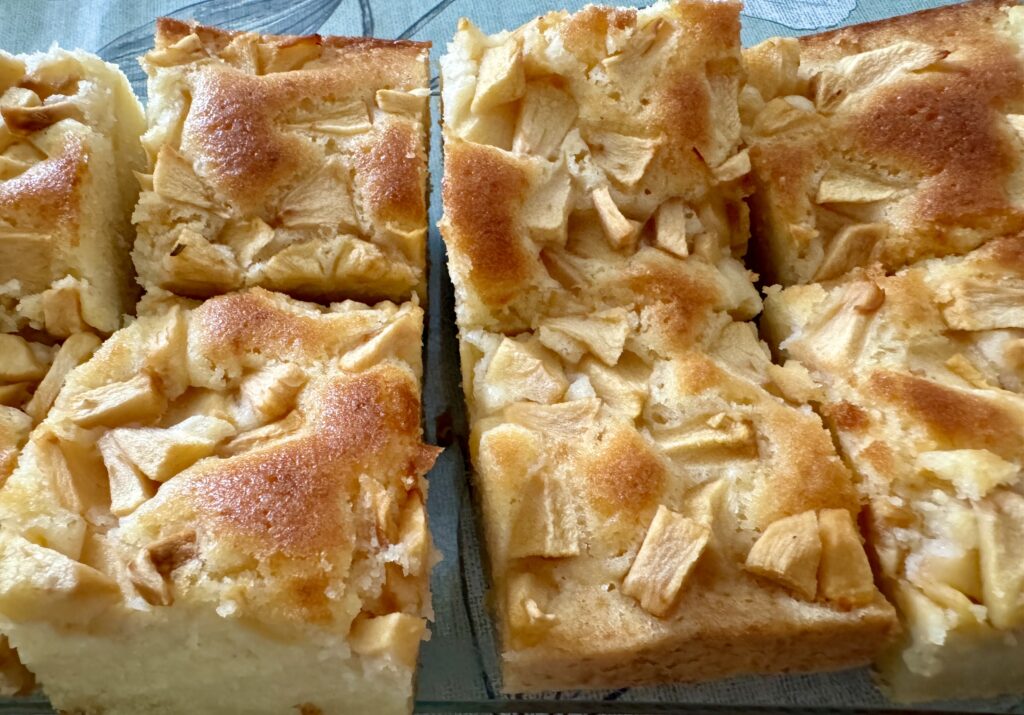
The highlight, though, was dessert. A delicate almond cake, fluffy and light, finished the meal on a perfect note. I still think about that cake. But even more, I think about the woman who made it named Gordonna, her resilience, her hospitality, and her quiet strength.
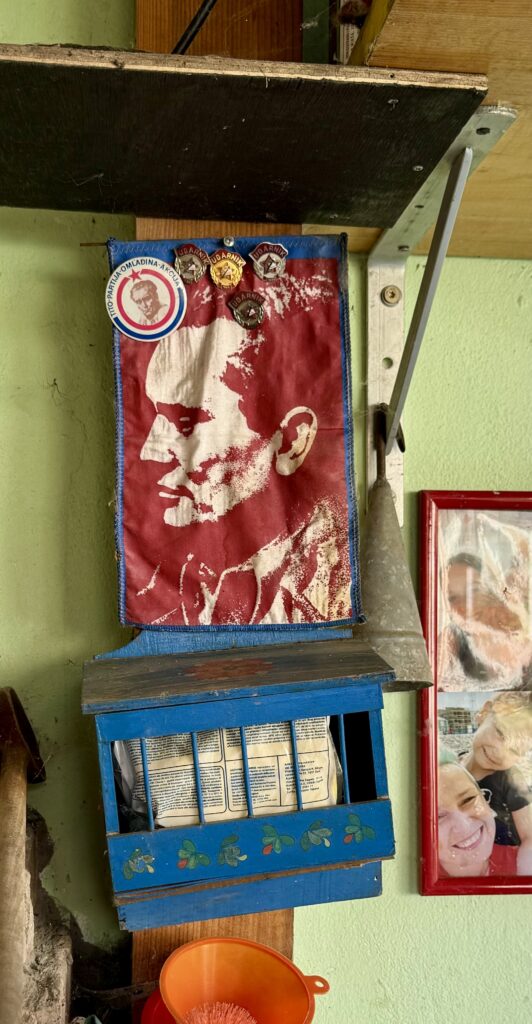
One unexpected detail stood out: a small homage to Tito displayed on her outdoor patio. She spoke of him with admiration, wishing he were still in charge. It was a jarring sentiment to hear, especially from someone so kind and open—but it revealed how complex history and memory can be in this part of the world.
A Few Stops, A Few Souvenirs
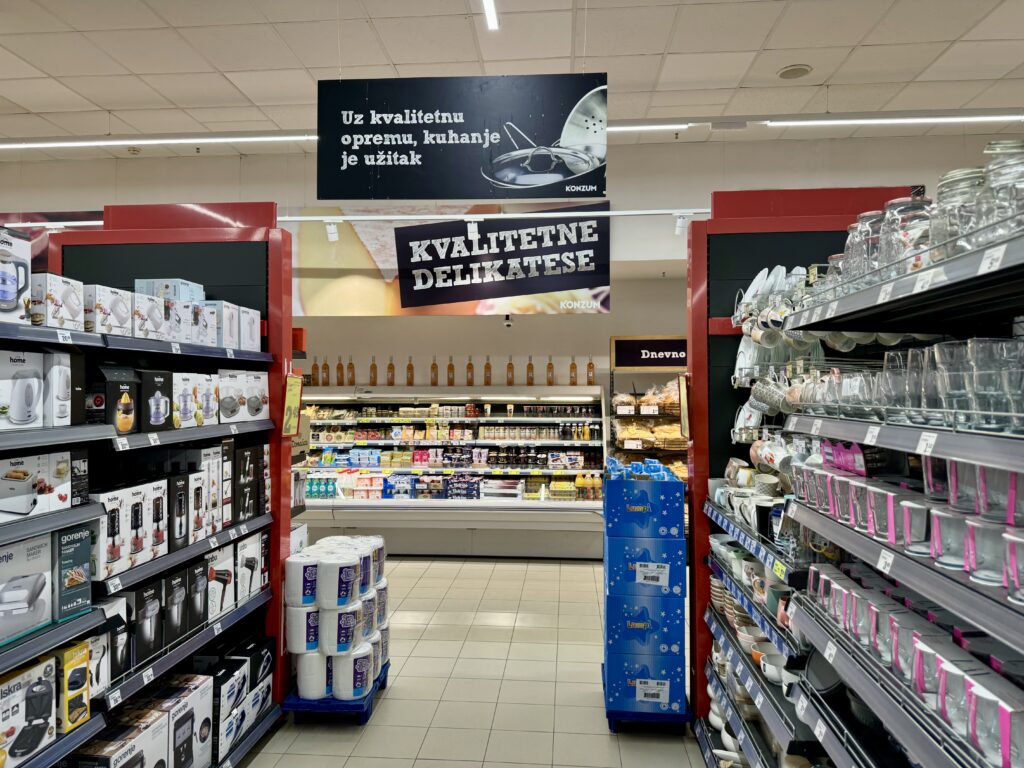
I enjoy seeing the local grocery stores when we travel, and Croatia didn’t disappoint. We visited the country’s most popular grocery chain and picked up a few things to bring home, including Vegeta—a locally loved seasoning blend that’s used in nearly every Croatian kitchen. I honestly wish I’d bought more. It’s salty, herby, and somehow makes everything taste better.

We also browsed a small shop selling handmade heart-shaped cookies and crafts. I loved the idea that something as simple as a heart could be such a powerful symbol. It made the perfect gift—and a quiet reminder of what we’d seen and learned.
Looking Back
Vukovar isn’t flashy. It’s not a place filled with grand museums or polished tourist sites. But it tells a story that matters—and it tells it honestly. There’s pain here, yes, but also pride. There’s grief, but there’s also grace. And somehow, both coexist in the quiet strength of this city.
Traveling doesn’t always mean seeking out beauty and pleasure. Sometimes it means standing in places that have endured suffering—and learning from the people who still call those places home.
We left Vukovar with full hearts and a deeper appreciation for what peace really means. And we carried with us the taste of almond cake, the sound of stories told over lunch, and the image of a water tower that refused to fall.
See also:
Budapest Revisited: A Wonderful Beginning
Vukovar, Croatia: A Quiet and Powerful Strength (This Post)
Discovering Novi Sad: Serbia’s Unexpected Charm
Belgrade, Serbia – A City of Complex History
Golubac Fortress and Lepenski Vir – A Day in Northern Serbia
The Iron Gate Gorge: From Decebalus to Danube Locks
Viden, Bulgaria: Roses, History and Symphony
Belogradchik Fortress: Bulgaria’s Hidden Gem in the Balkan Mountains