
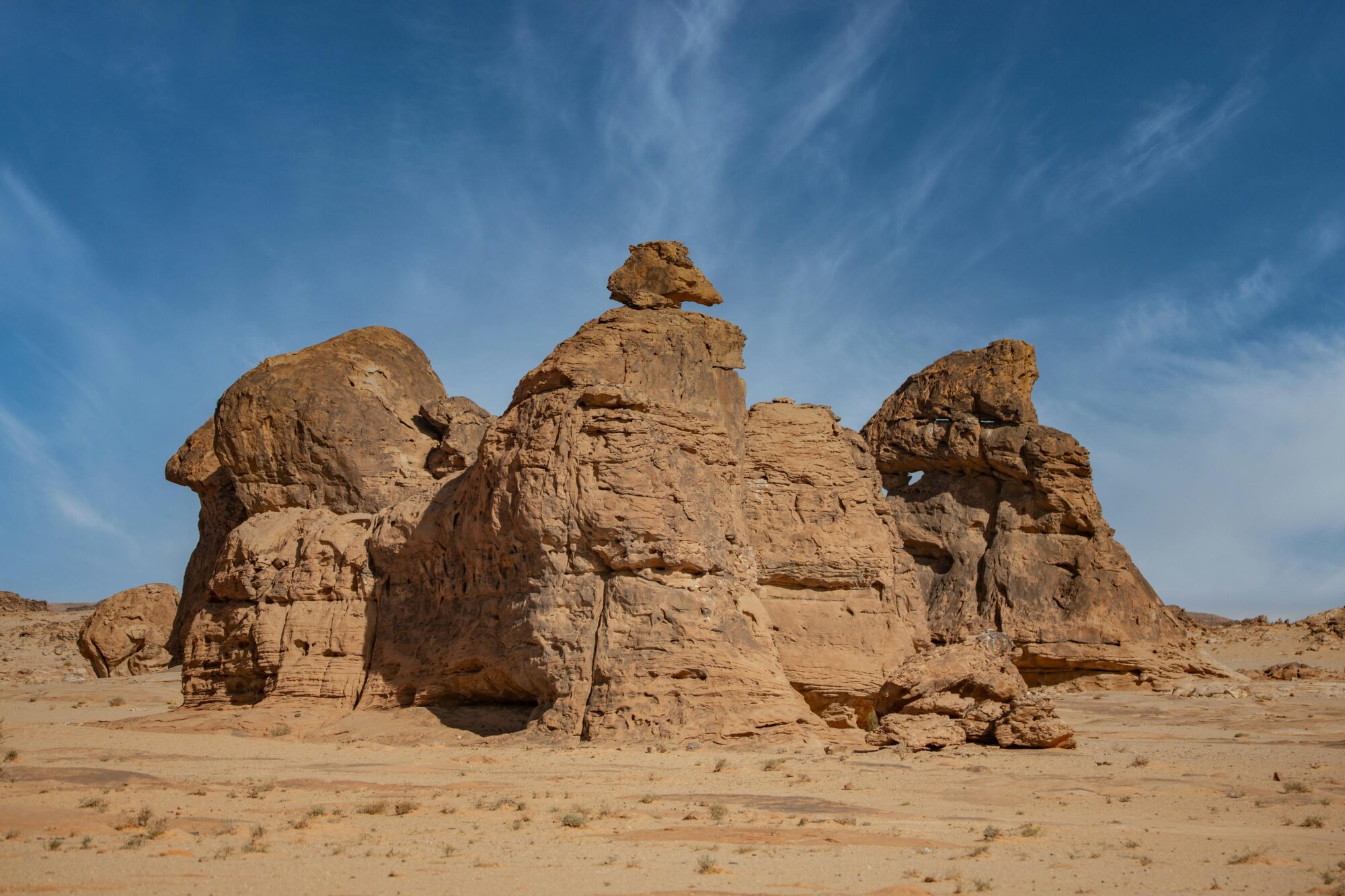
Chad is a land of striking contrasts—from the golden sands of the Sahara in the north to the green savannas and lake-filled basins in the south. It’s a country where nomadic traditions, ancient history, and raw natural beauty come together in one of Africa’s most underexplored destinations. For adventurous travelers, Chad offers a glimpse into life on the edge of the desert and access to some of the most remote, dramatic landscapes in the world.
Top Things to Do in Chad
Marvel at the Ennedi Plateau
A UNESCO World Heritage Site, the Ennedi Massif in northeastern Chad features dramatic rock formations, natural arches, canyons, and prehistoric rock art. Often called “the Sahara’s best-kept secret,” this surreal landscape offers a dreamlike setting for trekking and photography.
Explore Zakouma National Park
Located in the south, Zakouma is one of Central Africa’s greatest conservation stories. After years of poaching and instability, this wildlife park has rebounded with thriving populations of elephants, lions, giraffes, buffalo, and hundreds of bird species. Safari experiences here are remote, raw, and highly rewarding.
Visit N’Djamena’s Central Market
The capital city’s bustling Grand Marché is an ideal place to observe daily life, shop for regional spices, colorful fabrics, and handmade crafts, and try traditional Chadian street food. It’s also a window into Chad’s diversity, with more than 200 ethnic groups represented.
Admire Lake Chad
Though diminished in size due to climate change, Lake Chad remains an important ecological and cultural hub shared with neighboring countries. Boat tours and village visits provide insight into the fishing communities who rely on the lake’s waters and seasonal rhythms.
Cultural Experiences
Chad is a deeply multicultural nation, with Arabic and French as official languages and a blend of Islamic, Christian, and indigenous beliefs. Nomadic life is still prevalent in many regions, and hospitality is central to Chadian identity.
Artisans produce jewelry, leather goods, and textiles, and traditional music and dance are integral to celebrations and storytelling. Visiting during a local festival or market day brings these cultural elements to life.
Food to Try
Chadian cuisine is hearty and often shared communally. A common dish is boule, a millet or sorghum dough served with vegetable or meat sauces. Jarret de boeuf (slow-cooked beef shank) is a flavorful and popular meal, often spiced with regional herbs.
In northern areas, dishes may feature camel meat, dates, and milk-based sauces, reflecting desert influences. Grilled fish, sweet potatoes, okra, and local greens are common in the south. La bouillie, a sweet millet porridge, is often served at breakfast.
Best Time to Visit
The best time to visit Chad is during the dry season from November to March, when temperatures are more manageable and wildlife viewing is at its best. The rainy season from June to September can make some roads impassable, particularly in the south.
Need to Know
Chad is a destination for seasoned travelers due to limited infrastructure and fluctuating political conditions. Travel permits may be required for certain regions, and it’s important to travel with a trusted local guide or tour operator. Always check current travel advisories and entry requirements before planning your trip.
Quick Glance
Capital: N’Djamena
Known For: Ennedi Plateau, desert cultures, wildlife in Zakouma
Top Experiences: Rock formations, nomadic life, markets, safaris
When to Go: November–March
Currency: Central African CFA Franc (XAF)
Good to Know: Travel logistics can be challenging—advance planning is essential.